
No, it’s not time to plant the onions. Now come inside. Photo by ivars-4324357
As far as winters go, the winter of 2023-24 has been fairly mild, (and I am fully aware that I just jinxed not only myself but also the whole Northeast, but I needed an opening paragraph. If people have to suffer through weeks of an Arctic hellscape so I can have a semi-snappy opening, I’m willing to pay that price.)
Mild or not, for those of us gardeners who have the last-frost date memorized like our favorite kid’s birthday, winters can feel like an eternity,
Fortunately, there’s plenty you can do to stave off the slow madness that creeps into your soul after not seeing the sun for days at a time.
Take Stock of Your Supplies

This is the first draft of my grocery list. Photo by 1614223-1280-1
Remember during the pandemic when everybody took up gardening? Between the increased interest and supply chain issues, seeds were hard to come by. That’s when many gardeners got into the habit of ordering their seeds early. Even though life is more or less back to normal (yeah, this is normal now), it’s still a good idea to take stock of what you need before you need it.
You can do your inventory in whatever way works for you. For my neurodivergent brain, a complete list is a process that spans days and multiple pieces of paper stuffed into my pockets, wallet and many, many notebooks.
Mentally walk through the gardening season in your head and think of everything you’ll touch between April and September. Row tags? Stakes? Cages? Nutrients? Trowels? Gloves? Are you sick of this literary device?
Check Your Seeds

This is porn to me. Photo by 7110591-1280-1
Did you plant all your cucumber seeds last year, or do you have some left over? If your memory is anything like mine, trusting yourself to remember what seeds you have left over from last year is like trusting Bill Clinton with a pocket of Viagra at a Mary Kay conference with an open bar.
Did you know that seeds have expiration dates, and if you eat the product of expired seeds, you could get ill, or even die?
Sucker.
Nature (and human beings) have designed seeds to be pretty rugged. They’re created to withstand drought and extreme heat and cold. The date on the package is usually the sell-by date. You can keep seeds around for years as long as they are stored in a cool, dark, dry location.
That doesn’t mean, however, that seeds are immortal. A good way of testing whether a packet of seeds is still good is to place about 10 seeds in a damp paper towel and keep them at room temperature.
If at least half the seeds germinate within 10 days or so, you can plant the seeds with a fairly high likelihood they’ll grow.
Plan Your Garden

I use my old Dungeons and Dragons graph paper notebooks. That is not a joke. Photo by pixabay-159746
Once the inventory is complete. It’s time to get out the graph paper and map out what you’re going to plant next year. This step isn’t a must for everybody. A lot of people plant the same vegetables in the same quantities in the same locations every year. If you’re properly amending your soil in the fall, you don’t even need to rotate your crops.
If you’re like me, however, you’re always switching things up. Last year we fought a vine borer infestation, so we had to move our zucchini and pumpkins to different beds. Also, in addition to our stalwarts, we have enough space to try a few new things. Cantaloupes were an abject failure, but leeks, on the other hand, grew very well.
Up Your Nutrient Game

Oh, this isn’t me. I’m more at the ‘cultivating mass’ portion of my workout. Photo by pexels-anush-gorak-1229356
For your plants. Not you. I am not in any way advocating the use of performance enhancing drugs to step up your gardening. If you want to take it to that level, that’s between you and your Creator.
As I said about two minutes ago, nutrients can turn a good gardening season into a great gardening season. You could take the coward’s path and get an all-purpose fertilizer. Or you can go next-level and figure out what your plants need to thrive and tailor your nutrients as necessary. Which reminds me…
Have You Thought About
Companion Planting?
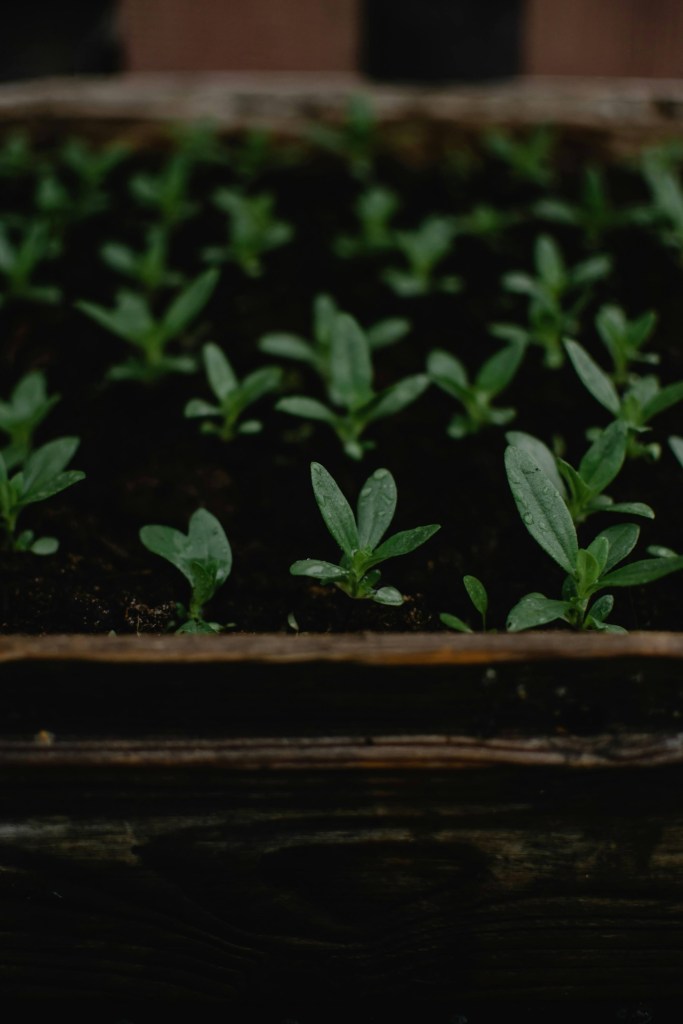
Will you be my neighbor? Photo by pexels-anush-gorak-1229356
See, neurodivergent. This would have made a great piece to go with the garden planning bullet point, but I just thought of it, so instead it’s down here, completely out of context. Oh well, I’m stuck now. Not much I can do about it.
Anyway, companion gardening can increase your yield in several different ways. By planting crops with similar nutritional needs together, you’re getting more bang for your fertilizer buck and now that I say that and remember that fertilizers can be used to make explosives, I wonder which government watch list I’m on now? Oh well, one more isn’t going to change much at this point.
Also, companion planting can help you take advantage of more garden space. For example, planting basil among your tomato plants kills two birds with one stone. And by birds I mean bugs, the birds of the invertebrate world. Basil helps keep away pests that can feed on your tomato plant.
Don’t actually kill birds with stones. It won’t help your garden.
But Bob, you’re saying, my tomatoes take up every inch I can give them. There’s no way I’m going to put basil or anything else in there. Trust me, you’ll totally be lollipopping your tomato plants this year. You’ll have room.
***
See, there are so many gardening-related tasks to keep you from that long, necessary and totally boring to-do list. I mean, really. What would you rather do, look at seed catalogs or clean out the fridge?
I thought so.
 Bob Recotta Communications
Leave a comment